August 26, 2026
3:49 min read

Many industries depend on rectifier transformers to convert AC power into a stable DC supply for smooth and efficient operations. This blog covers how rectifier transformers work, where they are used, and the key benefits they offer. You'll also learn simple maintenance practices that help improve performance, reliability, and service life.
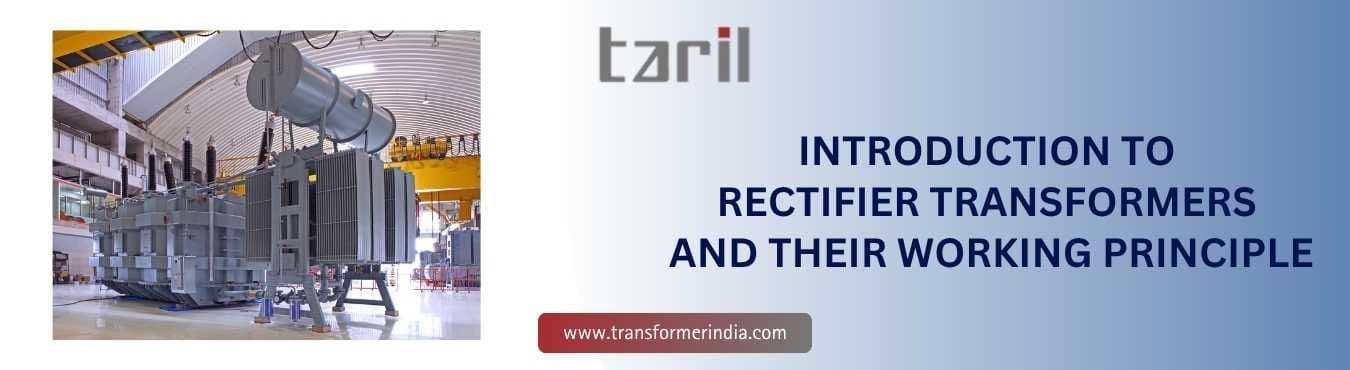
Rectifier transformers are essential devices in modern industrial operations that require reliable conversion of alternating current (AC) into direct current (DC). They play a crucial role in providing stable, high-quality DC power for heavy machinery, electroplating units, railway electrification systems, and various other industrial applications. Designed for precision and durability, rectifier transformers combine electrical efficiency with operational safety.
As one of the leading transformer rectifier manufacturers, TARIL delivers robust, high-performance solutions that cater to both domestic and international industrial needs. This article provides an in-depth overview of rectifier transformers, their working principle, applications, and the advantages they offer for industries relying on AC to DC converters.
A rectifier transformer is a specialized electrical transformer designed to work with rectifier circuits. Unlike standard transformers, which simply change voltage levels, rectifier transformers are optimized to handle AC to DC conversion. They are engineered to provide a controlled DC output, maintain high efficiency, and ensure minimal energy losses in industrial systems.
Key Features of Rectifier Transformers
By integrating advanced engineering principles, TARIL, one of the trusted global transformer manufacturers, ensures that every rectifier transformer delivers optimal performance with minimal maintenance requirements.
The operation of a rectifier transformer is based on two primary functions: voltage transformation and rectification. Understanding these steps provides clarity on how AC power is efficiently converted into DC power.
The transformer receives incoming AC power from the utility grid. Depending on the application, it may step up or step down the voltage to match the required DC output specifications. The transformer also provides electrical isolation between the high-voltage input and the low-voltage output, which is essential for operational safety.
Once the AC voltage is adjusted, it passes through a rectifier circuit consisting of components like diodes, thyristors, or silicon-controlled rectifiers (SCRs). These rectifiers convert AC voltage into pulsating DC voltage. Further smoothing using filters and inductors produces a steady DC output suitable for industrial equipment.
Rectifier transformers are integral to numerous industrial and commercial applications where DC power is essential. Some of the most common uses include:
Choosing experienced transformer rectifier manufacturers ensures industrial clients receive custom solutions tailored to specific operational requirements, reducing downtime and increasing productivity.
TARIL, a trusted name among global transformer manufacturers, offers a range of rectifier transformers with distinct advantages:
By focusing on quality, performance, and client-centric design, we ensure industrial operators receive not just a product, but a complete power conversion solution.
Proper maintenance ensures that rectifier transformers operate efficiently for years:
Following these practices helps maximize operational life and maintain consistent performance.
Rectifier transformers are indispensable in modern industrial operations that rely on DC power. They ensure efficient AC to DC conversion, maintain operational safety, and provide long-term reliability for critical machinery and infrastructure. By partnering with experienced transformer rectifier manufacturers, businesses gain access to high-quality, customized electrical transformers that meet global standards and enhance industrial productivity. Whether for railways, manufacturing, or data centres, rectifier transformers provide dependable, long-lasting solutions tailored to every operational need. Need a reliable rectifier transformer for your application? Partner with TARIL for customized, high-performance transformer solutions designed to meet your industry's evolving power requirements.
What makes rectifier transformers different from standard transformers?
Rectifier transformers are designed specifically for AC to DC conversion, unlike standard electrical transformers, which only change AC voltage levels.
Which industries benefit most from rectifier transformers?
Industries such as electroplating, heavy manufacturing, railway electrification, telecom, and renewable energy rely on rectifier transformers for stable DC power.
Can rectifier transformers handle high-capacity industrial loads?
Yes, rectifier transformers are engineered for heavy-duty applications, ensuring reliability under continuous high-load conditions.
Who are the leading transformer rectifier manufacturers globally?
TARIL is recognized among global transformer manufacturers, delivering custom, high-quality solutions for diverse industrial applications.
How do rectifier transformers improve AC to DC converter performance?
By providing stable voltage and minimal harmonic distortion, rectifier transformers enhance the efficiency and lifespan of AC to DC converters.
What maintenance practices ensure the longevity of rectifier transformers?
Regular inspections, cooling system maintenance, electrical testing, and professional service support all contribute to reliable and long-lasting operation.