
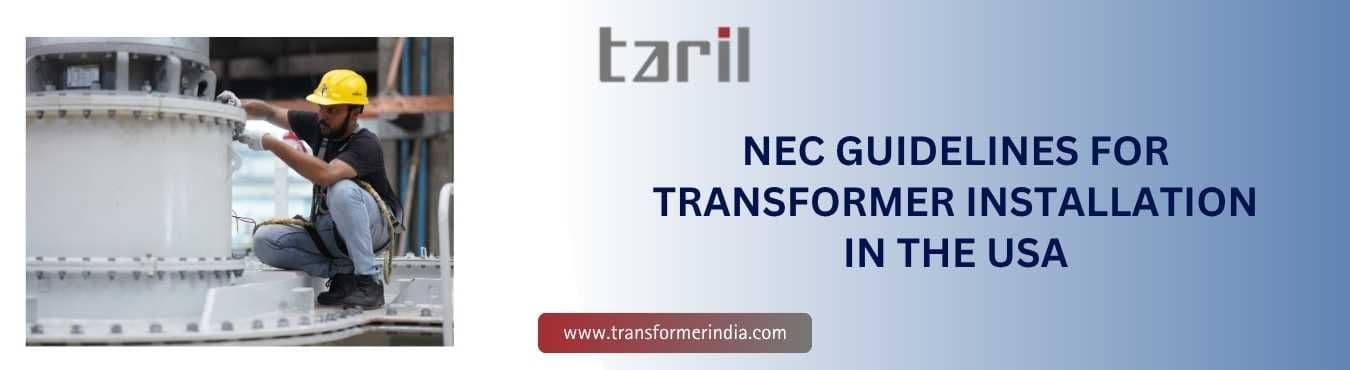
Intro - Why is NEC compliance non-negotiable in transformer projects?
NEC guidelines for transformer installation in the USA require defined clearances, ventilation, grounding, bonding, and overcurrent protection for every transformer in accordance with NEC Article 450.
It defines installation rules for transformers, including placement, protection, and grounding. These rules apply to engineers, EPC contractors, and industrial transformer manufacturers who supply equipment to US projects.
Non-compliance means failed inspections, rework, and project delays – not just a technical issue.
In the USA, the National Electrical Code (NEC), published as NFPA 70, is adopted as law by most states and municipalities. That means a non-compliant transformer installation is a liability, a permit failure, and in some cases, a direct safety hazard.
NEC compliance is not the finish line. It is the starting point for a safe and reliable transformer installation.
What are the core NEC requirements for transformer installation?
NEC defines four critical areas that determine whether a transformer installation is compliant: placement, ventilation, grounding, and protection.
Failure in any one of these can lead to rejection during inspection.
Clearances and Placement
Transformers must be installed where qualified personnel can safely access them for inspection, maintenance, and replacement. NEC Article 110 defines minimum working space and access clearances, while Article 450 governs transformer installation and fire protection requirements.
- Dry-type transformers: Units >112.5 kVA require fire-resistant construction or protection; >35 kV require a vault (unless otherwise permitted).
- Oil-filled transformers: Vault or fire-resistant installation with fire exposure controls is mandatory.
- Outdoor transformers: Fire spread must be controlled through adequate spacing or physical barriers.
- General requirements: Maintain working space, access, and clearances for ventilation and servicing.
Ventilation and Accessibility
Overheating is one of the most common causes of transformer failure. NEC addresses this through ventilation requirements to prevent overheating and insulation failure.
- Dry-type transformers require adequate ventilation. Airflow must not be restricted, and vent openings must remain unobstructed. Avoid placing units where vents face each other or direct hot air toward heat-sensitive equipment.
- Transformers must remain accessible for inspection and maintenance. Top surfaces of accessible units should be marked to prevent storage or obstruction.
Grounding and Bonding
This is one of the most frequently misapplied areas in transformer installation. Proper grounding ensures that fault current is safely dissipated and reduces the risk of electric shock.
- Neutral grounding must follow system design.
- Incorrect grounding is one of the most common causes of failure.
- Bonding ensures all metallic parts are at the same potential.
Overcurrent Protection and Disconnecting Means
Each transformer must be protected by a fuse or circuit breaker sized based on its rated voltage and full-load current, in accordance with applicable code requirements.
- Overcurrent protection is governed by NEC Article 240, with transformer-specific provisions in Article 450.
- Coordination between primary and secondary overcurrent protection is not universally required and applies only where specified by code.
- A disconnecting means must be readily accessible, or capable of being locked in the open position if not within sight.
A transformer installation is compliant only when placement, cooling, grounding, and protection work together as a system.
How do NEC requirements vary for different transformer types?
NEC requirements are not identical for all transformers. They vary based on voltage level, application, and design.
High-Voltage Transformers
High-voltage transformers, especially those above 35 kV, are subject to stricter installation requirements, including vault installation, wider clearances, and proper insulation coordination.
- Greater spacing and insulation requirements.
- Higher fault energy requires stronger protection systems.
- Site planning directly impacts both safety outcomes and regulatory compliance.
Rectifier Transformers
Rectifier transformers operate under non-linear loads and harmonic conditions. They carry thermal and electrical stress that standard designs do not account for.
- Additional thermal stress must be considered in the design.
- Ventilation and cooling become more critical.
- Protection systems need to be calibrated for harmonic distortion.
Special Transformers (Industrial Applications)
Special transformers used in industries such as cement, steel, and chemical processing often operate in harsh environments and may have additional compliance requirements.
- Installation must consider ambient temperature and dust levels.
- Cooling systems must match the actual operational duty cycle.
- Custom configurations may require additional code review and compliance steps.
This is where industrial transformer manufacturers must align design with site-specific NEC requirements.
What are the most common NEC compliance mistakes in transformer installations?
Transformer failures in the field are rarely about the equipment itself. In most cases, the root cause is improper installation planning or non-compliance with code requirements.
Here are the five most critical mistakes that engineers and contractors should know before a single bolt is tightened.
- Ventilation and Airflow Issues: Blocked vents or poor airflow violate NEC ventilation requirements, leading to overheating and reduced equipment life.
- Inadequate Clearances and Working Space: Transformers installed too close to walls or equipment restrict access and fail inspection requirements.
- Incorrect Protection Settings: Incorrect sizing of fuses or breakers, without following NEC limits, can cause inadequate protection or nuisance tripping.
- Grounding and Bonding: Missing or incomplete bonding connections, including unbonded metallic parts, can lead to shock hazards and non-compliance with NEC grounding requirements.
- Disconnecting Means Non-Compliance: Missing, inaccessible, or non-lockable disconnects fail NEC requirements.
- Design and Site Mismatch: Failure to consider actual site conditions, layout, and environment leads to installation and compliance issues.
- Ignoring Local Code Requirements: Failing to verify the adopted NEC edition and local amendments with the Authority Having Jurisdiction (AHJ) can lead to non-compliance.
These mistakes are most common when transformer suppliers and project teams are not aligned from the start.
Conclusion: NEC Compliance Starts at Design, Not Installation
NEC compliance should begin when the transformer is selected, not after it arrives on site. The safest and most efficient projects are the ones where the manufacturer, engineer, and supplier align early on installation requirements.
For transformer suppliers, industrial transformer manufacturers, and transformer manufacturers in the USA and globally, the time to address NEC requirements is before the unit is built - not after it arrives on-site.
With over four decades of experience, TARIL applies international standards at the design stage itself. Every transformer we build, standard or custom, is designed to support code-compliant installation from day one.
Planning a transformer project for the US market? Talk to TARIL's engineering team about NEC-ready design.
FAQs
What does NEC require for transformer installation in the USA?
NEC requires a safe working space, proper grounding and bonding, adequate ventilation, and suitable overcurrent protection. It also requires installation practices that support safe operation and maintenance.
Which NEC article covers transformer installation requirements in the USA?
NEC Article 450 - Transformers and Transformer Vaults is the governing article. Code requirements vary by location; always check the applicable version before installation.
Does NEC apply to high-voltage transformers above 35 kV?
Yes. NEC applies to both low- and high-voltage transformers (including those above 35 kV), but additional standards such as IEEE and utility requirements are typically used for detailed high-voltage design.
Who is responsible for ensuring NEC compliance on US projects?
The AHJ enforces compliance, while engineers, installers, and manufacturers share responsibility for proper design, equipment, and installation.
Do transformer suppliers ensure NEC compliance?
Suppliers assist with compliance through proper equipment and documentation, but final compliance depends on correct installation and site conditions.
Disclaimer: This content provides a general overview of NEC requirements for transformer installation. Always refer to the latest NEC (NFPA 70), local codes, and project-specific engineering before making decisions.