August 25, 2026
5:35 min read

Power systems depend on several components working collaboratively to ensure smooth operations. One such component is auxiliary transformers. These devices provide a continuous power supply to internal systems and step down voltages to safe, usable levels - ensuring critical equipment runs at all times. This blog will help you understand the meaning of auxiliary transformers, their functions, and their applications across industries served by leading industrial transformer manufacturers.
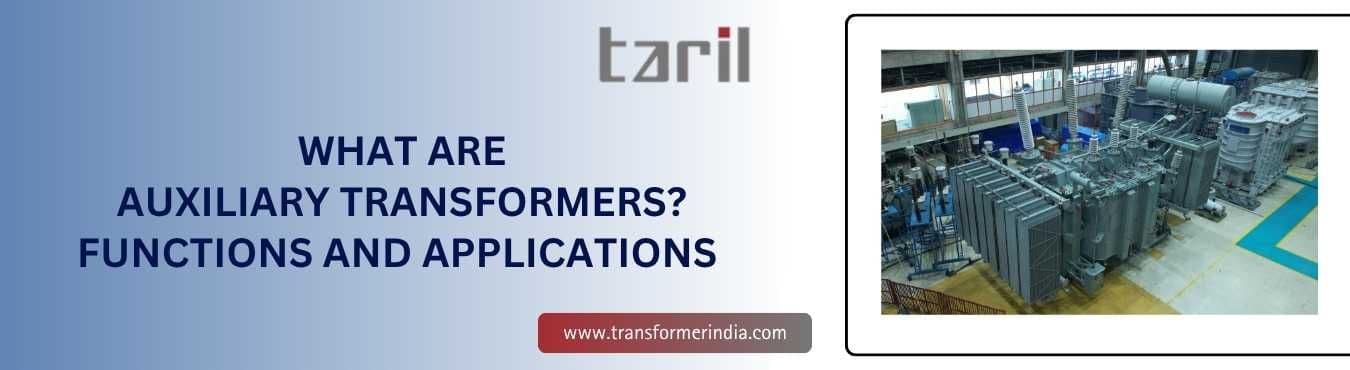
Every power plant, substation, and industrial facility functions on more than simply the electricity it transmits or generates. There is a network of internal systems - including switchgear panels, protection relays, cooling pumps, alarms, and lighting - each requiring its own independent power supply. That is exactly what a low-voltage transformer, like the auxiliary transformer, offers.
This small but essential transformer keeps the supply uninterrupted, ensuring that all internal systems remain safe and operational at all times. Let us better understand auxiliary transformers, their applications, and their functions in this guide.
Auxiliary transformers are small transformers that play a crucial role in electrical power systems. They are specifically designed to supply power to auxiliary equipment such as lighting, control circuits, protection relays, and motors.
Unlike a power transformer, which manages bulk electricity transmission at very high voltages, auxiliary transformers operate at lower output levels and focus on stepping voltages down to safe, usable levels. For instance, they bring voltages down from 11kV or 33kV to 400V or 230V.
What makes these transformers different from others is their design philosophy. Unlike standard transformers, auxiliary transformers are engineered to meet the specific load requirements of the applications they serve.
Auxiliary transformers are available in different types to suit varying requirements and capacities:
It would not be wrong to call auxiliary transformers the backbone of internal power supply in any electrical facility. Their core functions include:
Large generators and transformers produce massive amounts of heat during operation. Auxiliary transformers power cooling fans, water cooling systems, and oil circulation pumps to prevent overheating, ensuring safe and continuous operations.
Power plants and substations feature control rooms filled with sensors, monitoring panels, and relays. These systems trigger alarms, detect faults, and shut down equipment safely in the event of an emergency. Auxiliary transformers ensure uninterrupted power supply to all of these systems - even when the primary grid is experiencing problems.
Operators use switchgear to connect, redirect, and disconnect power flowing through the facility. Auxiliary transformers provide a stable, clean voltage supply to these panels, ensuring smooth and efficient operations at all times.
One of their core functions is reducing high generation or transmission voltages - such as 11kV or 220kV - to safer, usable levels such as 415V or 230V for standard equipment and control systems.
In electricity generation facilities, auxiliary transformers provide the baseline power required to bring systems back online following a complete blackout - a capability known as a black start.
Auxiliary transformers provide galvanic isolation between control circuitry and high-voltage lines. This protects low-voltage hardware from electrical interference and keeps operators safe during maintenance and fault conditions.
Auxiliary transformers are found wherever electrical systems require dedicated internal support. Common applications include:
Auxiliary transformers supply power to relays, control panels, pumps, and cooling fans in both hydroelectric and thermal power plants. They ensure the reliable and safe operation of critical systems during startup and throughout normal operation.
In substations, these transformers supply power to circuit breakers, protective relays, and communication systems. They ensure appropriate electrical isolation and voltage regulation between auxiliary equipment and high-voltage lines, ultimately improving operational safety.
Many manufacturing facilities and factories depend on auxiliary transformers to power lighting, non-critical machinery, and control systems. Three-phase auxiliary transformers are particularly recommended for industries requiring balanced and reliable power distribution for heavy-duty equipment.
In the solar industry, auxiliary transformers play a key role in maintaining system efficiency. They supply uninterrupted power to circuit breakers, relays, inverters, and control systems, while also regulating voltage to prevent disruptions to the generation process.
In metro and railway systems, these transformers support signalling systems, lighting, and other critical functions. They ensure efficient electrical load management, contributing to continuous service and passenger safety.
Auxiliary transformers, though smaller than their high-voltage counterparts, play a crucial role in the entire electrical infrastructure. They ensure uninterrupted power supply to cooling systems and internal components, supporting smooth, safe, and efficient operations across power plants, substations, and industrial facilities alike.
Whether you want to upgrade an existing power facility or design a new substation, choosing the right auxiliary transformer is essential for safety and long-term performance.
At TARIL, we offer specially designed transformer solutions for your power infrastructure. If you wish to explore reliable auxiliary transformer options, feel free to get in touch with our team.
What are auxiliary transformers used for?
Auxiliary transformers provide an isolated power supply to internal systems including cooling pumps, control circuits, monitoring equipment, and lighting - across substations, renewable energy installations, and industrial plants.
Do auxiliary transformers require maintenance?
Yes. Well-maintained auxiliary transformers can last for decades. Dry-type units require periodic airflow checks and thermal imaging. Oil-filled units need dissolved gas analysis on a quarterly basis. All auxiliary transformers benefit from annual insulation resistance testing and torque checks on electrical connections.
How do you choose the right auxiliary transformer for your project?
Choosing the right auxiliary transformer involves considering several key factors, including the total load of the auxiliary systems it will power, the required output voltage, the available input voltage at the point of installation, the operating environment (indoor vs. outdoor), and the specific application requirements.
What types of industries use auxiliary transformers?
Auxiliary transformers are widely used across power plants, substations, solar installations, metro and railway systems, and industrial facilities.
Why are auxiliary transformers important for the system's safety?
Apart from bringing voltage to safer and usable levels, auxiliary transformers offer electrical isolation between low-voltage control circuits and high-voltage systems. This ensures that faults in the high-voltage systems don't spread. Ultimately, this prevents a disastrous equipment failure and keeps the operators safe.