August 25, 2026
5:35 min read

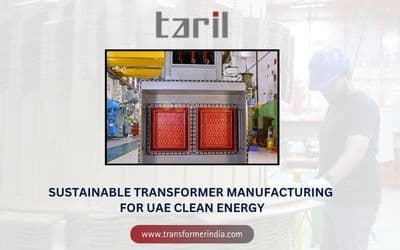
Operating transformers in the UAE is challenging because of extreme heat above 50°C, strong sunlight, and humid, salty air. This blog explains how transformer manufacturing companies design reliable units that use enhanced cooling, heat-resistant insulation, and special fluids to ensure safe performance in desert conditions.

The UAE is one of the toughest environments on earth for electrical equipment. The electrical infrastructure in the UAE operates under some of the harshest conditions in the world. Summer temperatures exceed 50°C, solar radiation is intense, and dust storms are common. Meanwhile, the country continues adding substations, solar farms, industrial facilities, and oil and gas plants.
For utility engineers and EPC contractors, installing a standard IEC-rated transformer in a desert solar park or industrial zone is a recipe for failure. Grid stability relies on transformers specifically designed for high-stress environments, which are built to withstand the combined impact of peak power surges and intense heat.
This blog explains how extreme desert temperatures impact transformers and how heat-resistant designs enable utilities and industries to maintain optimal performance, reliability, and service life.
Heat is the main enemy of a transformer’s lifespan. In the UAE, the problem is not just the heat generated inside the coils (copper loss); it is the fact that this heat has nowhere to go because the outside air is already hot.
Here is how it causes problems:
To solve these problems, reliable high voltage transformer suppliers move away from standard catalogue designs and use a climate-specific engineering approach.
Standard ONAN (Oil Natural Air Natural) cooling does not move enough heat in 50°C+ conditions. Heat-resistant transformers use
These features help keep oil and winding temperatures within safe limits even when ambient air is above 50°C.
Higher thermal class insulation, including Class H (180°C rating), is commonly used in desert transformer designs to provide additional thermal margin compared to lower-class insulation used in moderate climates.
Materials used include:
The exact materials used depends on the application and standard requirements. When data is application-specific, manufacturers validate this through testing rather than assumptions.
Mechanical design matters as much as electrical design.
Heat-resistant transformers often include:
These features reduce maintenance and extend service life in harsh outdoor installations.
Transformers for UAE applications are designed and tested to IEC or equivalent standards, with consideration for high ambient temperatures and site conditions. For desert environments, engineers review temperature rise limits and cooling performance more conservatively based on project requirements. Final testing and acceptance criteria are defined by utility, EPC, or end-user specifications to ensure reliable operation in extreme heat.
Testing requirements vary by project. Utility companies and contractors clearly specify what is needed to avoid confusion.
These special designs ensure important industries receive steady power despite the extreme heat.
In all cases, transformer failure disrupts critical operations - making reliability in extreme heat non-negotiable.
When issuing a tender or talking to suppliers, focus on these specifications to ensure you get a desert-ready asset:
Experienced Indian transformer manufacturing companies help you pick the right design based on actual operating conditions, not just technical specifications.
UAE's heat is not just an operating challenge – it is a design requirement.
Heat-resistant transformers are built for real UAE conditions and not just laboratory test standards. For engineers specifying industrial transformers, rectifier transformers, or furnace transformers for UAE projects, the critical step is working with transformer manufacturing companies like TARIL that understand desert engineering and have real experience supplying reliable transformers for extreme heat environments.
Planning a project in the UAE or GCC? Share your site conditions - temperature, sunlight, dust, coastal proximity - with manufacturers upfront. Request thermal test data and project references. Get transformers engineered for your actual environment, not just standard specifications.
Working with experienced manufacturers such as TARIL helps ensure transformers are engineered for real UAE operating conditions.
Can standard transformers operate in the UAE desert heat?
They can operate, but often with reduced loading or shorter life unless designed specifically for high ambient temperatures.
What is the best cooling method for transformers in the desert?
ONAF cooling with dust-rated fans is common for medium to large transformers. Very large units use OFAF. The system must handle dust, high temperatures, and continuous operation.
What ambient temperature are desert transformers designed for?
This depends on the project specification. Many designs consider ambient temperatures significantly higher than global averages, but exact values are defined by the utility or EPC.
Why does heat shorten transformer life?
Heat breaks down insulation. Constant high temperatures damage insulation quickly. In extreme heat, transformers have a much shorter lifespan unless they are specially designed to manage extreme climates.
Which UAE industries need heat-resistant transformers the most?
In the UAE, industries like power utilities, solar parks, oil and gas, and steel mills are the most vulnerable. These sectors require heat-resistant transformers because their equipment must run at full capacity during extreme summer peaks, where any thermal failure would lead to massive financial losses or safety risks.