
Intro
Australia’s large-scale solar and wind capacity is expanding rapidly, placing new demands on transmission and grid infrastructure. According to the Clean Energy Regulator, utility-scale renewables now supply a significant share of electricity in the National Electricity Market - driving the need for high-capacity, grid-ready power transformers. AEMO’s Integrated System Plan outlines major transmission expansion to support rapid wind and solar growth through 2050.
Most large solar and wind projects are concentrated in New South Wales, Queensland, Victoria, and South Australia. However, many sites are located far from load centres, often requiring power to be transmitted over hundreds of kilometres through weak grid areas. Thus, transformer selection has become critical. Undersized or unsuitable units can lead to inefficient power delivery, voltage instability, or project delays due to tight global supply chains.
Why Power Transformers Are Central to Solar and Wind Farms
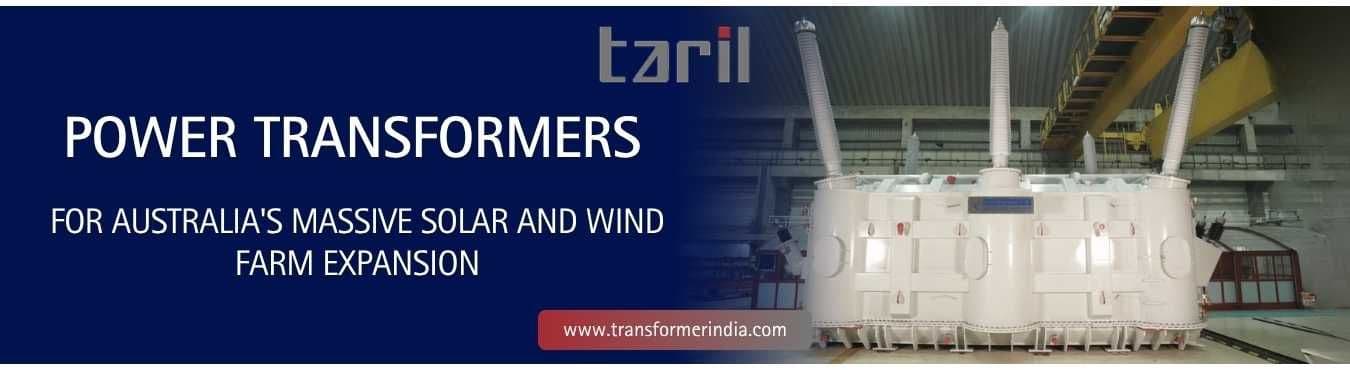
In both solar and wind installations, the power transformer acts as the strategic gateway. It serves as the primary interface between the low-voltage generation of solar inverters or wind turbines and the high-voltage transmission network. Solar farms use step-up transformers to raise inverter output voltage from low or medium levels to transmission voltages for export. Wind farms use multiple transformation stages, from turbine-level units to central substation transformers that connect to the network.
Transformer performance directly affects energy evacuation, voltage control, and fault behaviour. Poor transformer selection can limit export capacity, increase losses, and create operational problems that reduce project output. For Australian renewable projects operating over long distances and bad grid conditions, transformer design is not a commodity decision. It is a core engineering decision.
Australia-Specific Grid and Site Challenges
Renewable projects in Australia face a combination of challenges that differ from those in many other markets. Large solar and wind farms are often located far from cities, connected through long transmission lines. These conditions increase sensitivity to voltage fluctuations and reactive power imbalance.
High ambient temperatures, dust, and harsh outdoor environments place additional stress on transformer insulation and cooling systems. Intermittent renewable generation introduces frequent load changes, while low system strength in certain regions demands robust transformer performance during grid disturbances. Together, these factors make standardized solutions insufficient for many Australian sites. In such conditions, developers increasingly rely on special transformers designed for renewable duty, weak grids, and harsh environmental operation.
Technical Requirements for Renewable Power Transformers
To meet the demands of the Australian NEM and WEM, renewable-duty transformers require a bespoke engineering approach. Power transformers used in Australian solar and wind farms must handle variable loading and sustained operation under challenging environmental conditions. Correct voltage and MVA selection are essential to avoid thermal overstress during peak generation while maintaining efficiency at partial load.
Thermal design must accommodate high ambient via enhanced cooling (e.g., forced air/oil) and temperature-rise limits below standard to prevent derating. On-load tap changers are critical for voltage regulation, supporting grid compliance as output fluctuates. Insulation systems must withstand frequent switching cycles and fault conditions without accelerated aging.
In some projects, dry-type transformers are used for specific applications such as auxiliary systems or where fire safety is critical. However, for large-scale renewable evacuation, oil-filled power transformers remain the primary solution due to their higher ratings and efficiency.
Grid Compliance and Long-Term Reliability
AEMO’s GPS requirements under NER Schedule 5.2 make transformer impedance, tap range, cooling, and fault strength core to plant design. These parameters govern reactive power performance, fault ride-through, and voltage control for inverter-connected solar and wind projects.
Design choices that decrease losses, manage harmonics from inverter-based generation, and support reactive power control contribute directly to long-term asset performance. Given extended project lifecycles, transformer reliability impacts not only operational costs but also the financial viability of renewable investments.
With growing demand for transformers, Australian developers and contractors are working with experienced global suppliers. Established manufacturers, including leading Indian transformer manufacturers, offer large-scale production capacity and experience in delivering specialized transformers for demanding grid and environmental conditions. While some smaller applications may buy transformers online in Australia, utility-scale renewable plants require partners who understand AS 60076 standards and the grid-connection rules set by AEMO and local utilities.
Conclusion
Australia's renewable energy transition depends not only on generation capacity but on the infrastructure that connects it to the grid. They rely on power transformers that can export energy reliably, maintain grid stability, and perform consistently under Australia’s demanding environmental and grid conditions.
For utilities, contractors, and developers selecting power transformers for renewable projects, careful specification and supplier selection are critical. Whether sourcing locally or from experienced global manufacturers such as Transformers and Rectifiers India Ltd. (TARIL), transformer design decisions made today will shape grid stability and renewable performance for decades to come.
Partner with TARIL early to secure technically robust, grid-compliant transformer solutions that support timely project delivery and long-term performance.
FAQs
What are the typical voltage levels for Australian solar and wind farms?
Most utility-scale solar and wind farms in Australia step up generation to 132 kV, 220/275 kV, or 330 kV for connection to the transmission grid, depending on the region and the NSP’s requirements.
What makes Australian conditions challenging for transformers?
Remote locations, high ambient temperatures, long transmission lines, and variable renewable output increase electrical and thermal stress.
What grid compliance considerations apply to transformers in renewables?
Transformers used in renewable projects must meet NER requirements for voltage control, reactive capability, harmonics, and fault ride-through. The right electrical design ensures smooth grid approval and long-term reliability.
How do you design transformers for the high ambient temperatures in the Australian Outback?
We utilize thermally upgraded insulation and advanced cooling configurations (ONAF/OFAF) to ensure the power transformer can deliver its full rated MVA even when ambient temperatures exceed 40-45°C.
Are ester-filled or dry-type transformers suitable for Australian renewables?
Yes. Ester-filled transformers enhance fire safety and environmental protection, while dry-type designs provide dependable, maintenance-free performance in remote renewable sites.