
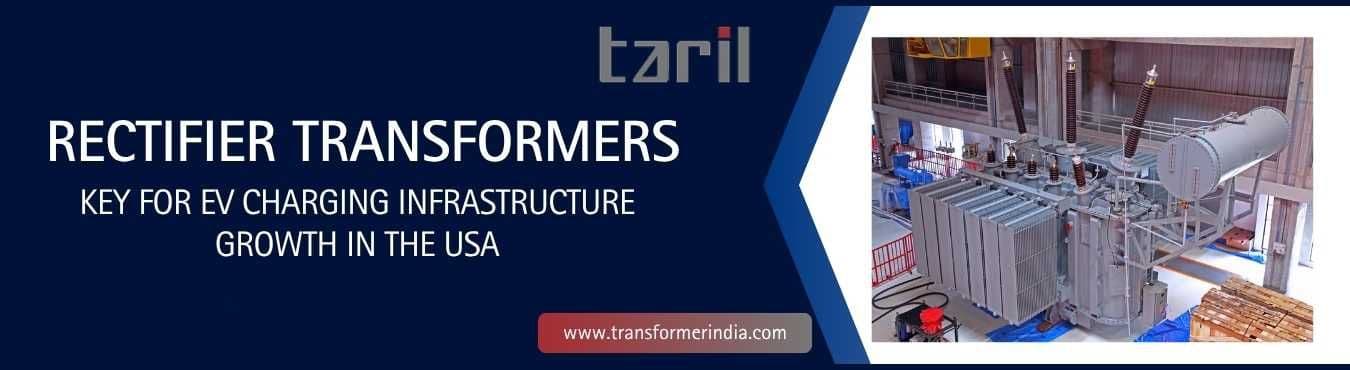
Intro - The Real Electrical Constraint behind US EV Charging Growth
As the US pushes toward a national network of 100,000 chargers, the industry focus remains on charger hardware rather than distribution and grid readiness. However, for electrical engineers, the real challenge lies upstream. High-power EV chargers operate on DC, while the grid supplies AC. Bridging this gap reliably, efficiently, and in compliance with power-quality standards is not a trivial task.
This is where rectifier transformers become essential to infrastructure planning. Without proper AC-to-DC conversion and harmonic control, EV charging sites can experience grid disturbances, overheating, and long-term reliability issues.
Why Standard Transformers Fail in High-Power EV Charging Stations
Standard transformers are built for normal, steady electrical loads. EV fast chargers impose a very different electrical profile. They generate high harmonic currents, uneven loading across phases, and continuous heat buildup from high-current operation.
When standard transformers are used in DC charging applications, several problems emerge. Harmonic distortion can exceed acceptable limits. Transformer losses increase sharply, causing overheating and faster insulation breakdown. Voltage regulation becomes unstable, especially in multi-charger hubs operating simultaneously. These issues directly affect uptime, maintenance costs, and utility compliance.
Role of Rectifier Transformers in the EV Charging Power Chain
To understand the necessity of this equipment, one must look at the power flow:
AC Grid (MV) → Rectifier Transformer → AC-to-DC Converter (Rectifier) → DC Bus → EV Battery.
The rectifier transformer sits just before the conversion stage. It does not just change voltage - it also provides electrical isolation, enables multi-pulse rectification, and prepares the system to handle high DC loads. As this component is at the start of the high-power stage, any issue with it will cause the entire system to fail. Unlike regular distribution transformers, rectifier transformers are specifically designed to work with AC-to-DC converters, making them a critical link between the grids and charging equipment.
What Rectifier Transformers Do Differently
A rectifier transformer is designed from the ground up for the current profile that ac to dc converters actually produce. Through special winding configurations (6-pulse, 12-pulse, or higher), these transformers greatly reduce harmonic distortion flowing back into the grid. Phase-shifting techniques cancel specific harmonic orders, helping charging installations meet power-quality requirements without excessive filtering.
Rectifier transformers also have stronger thermal design, better short-circuit protection, and optimized windings to handle sustained DC demand. Galvanic isolation between the AC grid and DC charging system improves safety and system stability. These features are why choosing the right rectifier transformer manufacturer is critical for EV infrastructure reliability.
US Grid Compliance and Power Quality Expectations
In the US electrical environment, utilities closely monitor harmonic distortion, voltage deviation, and fault performance at EV charging sites. Compliance with IEEE harmonic limits at the point of common coupling is essential, particularly for large public charging hubs and fleet depots.
Rectifier transformers help charging stations meet these requirements by controlling harmonics at the source rather than relying only on downstream fixes. For utility engineers and EPCs, this upstream approach simplifies compliance, reduces system losses, and improves long-term grid compatibility.
TARIL’s Rectifier Transformer Capability for the US Market
While there are many transformer manufacturers in the USA, TARIL brings a unique advantage to the American market. We have manufactured rectifier transformers for high-harmonic industrial processes for decades. This experience supports EV charging infrastructure that is engineered to align with IEEE power quality standards, particularly harmonic limits for rectifier-based systems.
As an established Indian transformer manufacturer, TARIL supplies rectifier transformers built to global standards for export markets. With 18,000+ global installations, 'Star Export House' status, and experience exporting to 40+ countries, TARIL positions itself as a reliable partner among transformer rectifier manufacturers.
Conclusion: Rectifier Transformers Are Core EV Infrastructure
EV charging infrastructure is only as reliable as the electrical systems behind it. Rectifier transformers are not auxiliary components. They are foundational equipment that determines power quality, thermal performance, and long-term operational stability. From high-load regions such as transformers in Texas markets to dense, grid-constrained transformers in New York installations, rectifier transformers are a critical determinant of power quality, thermal performance, and long-term operational stability.
Selecting equipment engineered for non-linear, high-duty operation is essential to building charging networks that scale without compromising grid compliance or uptime. Improper selection can limit expansion and increase the risk of non-compliance with grid power quality standards.
If you are designing or expanding EV charging infrastructure and need reliable AC-to-DC conversion solutions, working with TARIL – an experienced rectifier transformer specialist early in your project can significantly improve performance, compliance, and system reliability.
FAQs
Why can’t I use a standard distribution transformer for a DC fast-charging station?
Standard units cannot handle the harmonic currents generated by AC-to-DC converters. This leads to extreme overheating, reduced efficiency, and potential failure to meet IEEE grid requirements.
Can TARIL support large-scale EV charging projects in New York or Texas?
Yes. As established Transformer manufacturers USA, TARIL provides units engineered specifically for the North American grid, engineered to align with applicable IEEE, NEC, and utility interconnection requirements.
Do rectifier transformers help with grid power quality?
Yes. Multi-pulse rectifier transformer designs significantly reduce harmonic distortion and improve voltage stability.
What pulse configuration is best for a 350kW DCFC hub?
For high-power hubs, a 12-pulse or 24-pulse configuration is typically recommended. This significantly reduces Total Harmonic Distortion (THD) compared to a standard 6-pulse setup.
What role does a rectifier transformer play in EV charging? A rectifier transformer prepares an AC supply for conversion to DC, manages harmonics, provides isolation, and supports continuous high-current operation.