Introduction
A nuclear power plant does much more than generate electricity. Once the power is generated, it needs to be stepped up to the correct voltage and sent efficiently into the transmission network. This is where transformers become an important part of the electrical infrastructure.
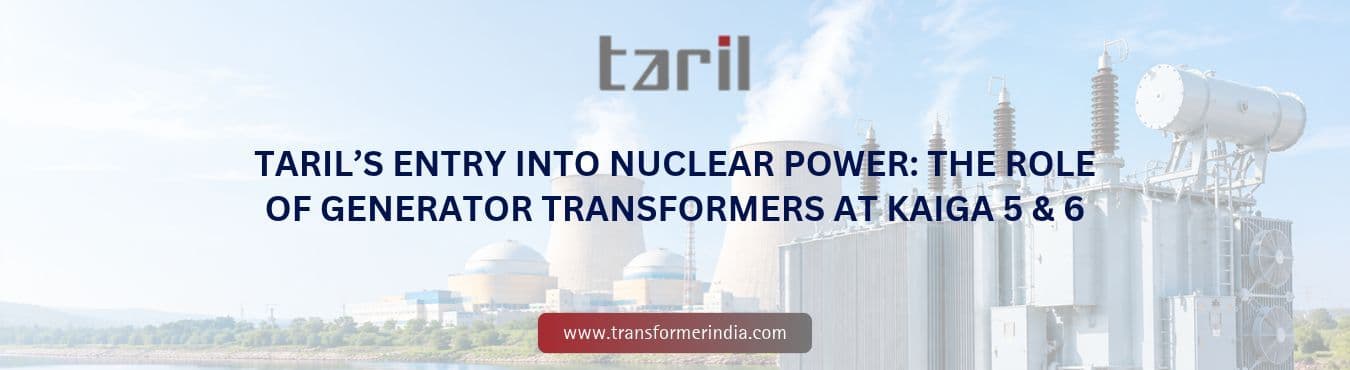
TARIL just got its first order in the nuclear power sector. The company has received an order from Megha Engineering & Infrastructures Limited (MEIL) for Generator Transformers for NPCIL’s Kaiga Units 5 & 6 project in Karnataka.
For TARIL, this matters beyond a single project. With this order, we will apply our transformer manufacturing and engineering expertise to a new area - India's nuclear power sector.
Why Do Nuclear Power Plants Need Generator Transformers?
Electricity generated by a power plant cannot be sent directly to the transmission network. It must first be stepped up to the required voltage level for efficient transmission.
A Generator Transformer, also known as a generator step-up transformer, performs this important function. It takes the electrical power produced by the generator and increases its voltage before sending it to the transmission system.
The basic flow is straightforward: Generator → Generator Transformer → Higher Voltage → Transmission Network
At Kaiga Units 5 & 6, the Generator Transformers play a key role. They connect the power generated at the plant to the grid. NPCIL’s project documents state that the generator transformer will step up the generator voltage before the power is connected to the switchyard and transmitted to the grid.
Generator Transformers are a type of power transformer that transfers electricity from a power plant to the transmission grid. Since they operate continuously under high loads, their design must account for reliability, thermal performance, and short-circuit withstand capability.
What Makes Kaiga Units 5 & 6 Important?
Kaiga is a Nuclear Power Corporation of India Limited (NPCIL) site in Uttara Kannada, Karnataka. The project comprises two indigenous 700 MWe Pressurized Heavy Water Reactors (PHWRs), with a combined capacity of 1,400 MW.
The project is part of India’s first fleet of ten 700 MWe PHWRs. Construction of Kaiga Unit 5 started with the first concrete pour on March 1, 2026, after receiving the required approvals and clearances. NPCIL has also confirmed that procurement and manufacturing of long-lead items are underway.
How Does TARIL’s Power Transformer Expertise Support Nuclear Power Projects?
TARIL is entering a project area that is already part of its product range. We manufacture Power Transformers, including Generator Step-Up Unit Transformers, which are designed to raise voltage from power plants for transmission to the grid.
Generator transformers are part of our broader Power Transformer portfolio.
As a power transformer manufacturer, we have experience in designing and manufacturing transformers for demanding power applications. Our Generator Step-Up Unit Transformers are designed for thermal reliability, high short-circuit strength and low losses.
WE also have expertise in high-voltage applications. Our power transformers range from 5 MVA to 500 MVA and can support voltage levels of up to 1,200 kV.
What Does This First Nuclear Order Add to TARIL’s Portfolio?
This Kaiga order is TARIL's first project in the nuclear power sector. It adds an important milestone to our track record in critical power infrastructure.
We already serve sectors including power generation, transmission and distribution, renewable energy, railways, steel and infrastructure. Our entry into nuclear power adds another highly specialised power-generation application to this portfolio.
We focus on high-voltage manufacturing, engineering, and testing, which helps us meet the different needs of the power sector.
Why Is This Milestone Relevant to India’s Power Infrastructure?
A power-generation project is not only about producing electricity. The electricity must also be transferred from the power plant to the transmission network.
Generator transformers are an important part of the power system. They help transfer electricity from the generating station to the transmission network.
For TARIL, the Kaiga project is therefore both – an entry in a new sector and an extension of its existing role in critical power infrastructure.
Conclusion
With the Kaiga Units 5 & 6 project, TARIL is entering the nuclear power sector for the first time - bringing its proven transformer expertise to a critical new application.
The generator transformers supplied for the project will help transfer the electricity generated by the two 700 MWe nuclear units to the transmission network.
For TARIL, this milestone expands the sectors where its transformer engineering and manufacturing expertise can be used and marks its first step into India’s growing nuclear power sector.
FAQs
What is a Generator Transformer in a nuclear power plant?
A Generator Transformer increases the voltage of electricity produced by the generator so it can be transferred to the transmission network.
Who has awarded TARIL the order for Kaiga Units 5 & 6?
TARIL has received the order from Megha Engineering & Infrastructure Limited (MEIL) for supplying Generator Transformers for NPCIL’s Kaiga Units 5 & 6 project.
What are Kaiga Units 5 & 6?
They are two 700 MWe indigenous Pressurized Heavy Water Reactor units being developed by NPCIL at Kaiga in Karnataka.
How do Generator Transformers support nuclear power generation?
Generator Transformers increase the voltage of the electricity produced by the plant. This makes it suitable for transferring the electricity to the transmission grid.
Is a Generator Transformer a power transformer?
Yes. A Generator Step-Up Transformer is a type of power transformer. It increases the voltage of electricity generated at a power plant before it is transmitted. TARIL includes Generator Step-Up Unit Transformers in its Power Transformer portfolio.